Digital sovereignty. Measurable. Audit-ready. Actionable.
Autonomy Track enables companies and public authorities to plan, report, and benchmark their digital sovereignty—quickly and transparently, based on a clear maturity and risk scoring model. Organizations receive a robust baseline assessment as well as concrete measures.
Digital Sovereignty
What digital sovereignty means for businesses and public authorities
Digital sovereignty means consciously managing digital dependencies across data, cloud hosting, legal jurisdictions, interfaces, open-source usage, IT security, and artificial intelligence. For businesses and public authorities, digital sovereignty therefore becomes a strategic capability to reduce risks, increase freedom to act, and make compliance demonstrable.
Features
An end-to-end workflow from assessment to report
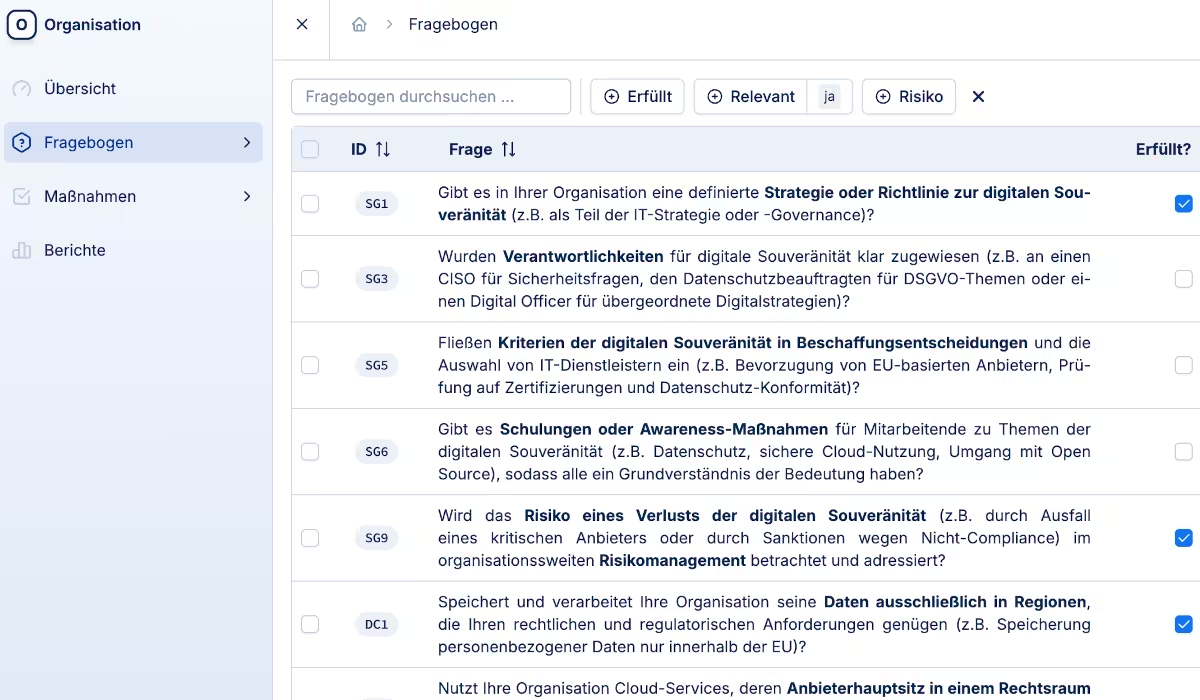
Autonomy Track guides you step by step through the assessment, calculates a score, and provides concrete measures, including exportable reports for documentation and alignment.
- 100 questions for a clear assessment—not gut feeling
- Structured by topics—fast, transparent, audit-ready.
- 370 actionable recommendations for every organization
- Concrete next steps—clearly written, prioritizable.
- Management dashboard & exportable reports
- Stakeholder overview—reports as PDF and Word for sharing and archiving.
Topics
Digital sovereignty—covered areas in the assessment
The questionnaire is structured by topic so it’s easy to see where risks lie and where the next measures should start.
Strategy & Governance
Without a clearly defined strategy, digital sovereignty can hardly be implemented effectively. In many organizations, digital sovereignty is not yet anchored as an explicit target state with clear responsibilities and measurable criteria. This category examines whether digital sovereignty is embedded in executive leadership and managed strategically.
Data Sovereignty & Cloud Hosting
Data sovereignty means retaining full control over your data—especially when it is processed in cloud environments. This includes consciously choosing where data is stored (preferably within your own legal jurisdiction) and protecting it from external access (e.g., when cloud providers are subject to the U.S. CLOUD Act). This category assesses how well the organization is positioned regarding data storage, cloud selection, and control.
Vendor Lock-in & Open-Source Usage
Strong vendor lock-in jeopardizes sovereignty, so application portability and system interoperability are crucial to enable a switch if needed. Conversely, the use of open-source software and open standards can strengthen digital independence: open source code creates transparency about data processing and reduces reliance on individual vendors. The questions examine whether strategies exist to mitigate vendor dependencies and how your organization uses open source.
Regulatory Compliance
Compliance with legal requirements such as the GDPR is a core aspect of digital sovereignty, since violations entail significant legal and financial risks. Newer EU regulations—such as eIDAS 2.0 (for digital identities) or the Digital Markets Act (which primarily imposes obligations on very large platform operators as so-called gatekeepers)—also set frameworks that organizations must adapt to depending on their role and exposure. The questions evaluate to what extent organizations meet these compliance requirements.
IT Security
High IT security standards and relevant certifications are fundamental prerequisites for digital sovereignty. Recognized certifications such as ISO/IEC 27001 are important indicators of a solid security posture. Many of the minimum measures required by the NIS2 Directive can already be covered by an ISO 27001-compliant security management system. This section asks about implemented measures, processes, and existing certifications in the context of IT security.
Digital Identities & Interoperability
Digital identities and the ability to integrate with other systems (interoperability) are further key building blocks of digital sovereignty. The Digital Markets Act requires certain very large platform operators to provide greater interoperability and data portability. Regardless of that, organizations benefit overall from open standards and identity and interface architectures that are easy to integrate. The questions in this section examine how well the organization is positioned in terms of identity management and technical interoperability.
Artificial Intelligence
The use of artificial intelligence (AI)— especially generative AI—is transforming processes, products, and decision-making workflows. In this context, digital sovereignty covers not only data storage, but also legal jurisdiction, control over models and configurations, evidence and auditability, and protection against dependencies and unintended information leakage. This topic block assesses AI governance, compliance (including the EU AI Act and GDPR), data and model sovereignty, security, and portability when using AI.
How it works
In 3 steps from “unclear” to “audit-ready”
No overhead: short inputs, clear scoring, concrete next steps—and a report that can be shared right away.

Complete the assessment
Answer questions quickly and transparently across clear topics.

Get scoring & measures
Risk and maturity scoring plus concrete measures that are clearly described and can be tackled in priority order.

Share the report
Export reports in PDF and Word formats that structure the results instead of unstructured presentations.
Pricing
Start for free, scale later
Start right away with a free baseline assessment, then expand features and content later.
Full English version available in H2 2026Free
Perfect for a quick baseline assessment. Use this initial overview to implement the first meaningful quick wins.
- ✓30 of the most important questions plus more than 100 measures
- ✓Export a report as a PDF
- ✓1 user
Solo
The full catalog for comprehensive analyses and roadmaps. Perfect for individuals and small organizations.
- ✓100 questions and 370 recommended measures
- ✓Export as an editable Word document
- ✓1 user
Team + Enterprise
Multiple users and management of multiple organizations. Ideal for public authorities and companies that need to scale.
- ✓10 (Team) to unlimited users (Enterprise) in different roles
- ✓Multiple organizations/tenants
- ✓SSO and more
Contact
You’re always welcome to get in touch
Want to share feedback or ask questions? Early access, plan upgrades, or join the list for Team and Enterprise plans?

“
Europe’s digital sovereignty has never been as important as it is today.
”
Andreas Hess
/ˈændreɪəs hɛs/ • 🌍 → Europe → GermanyFounder, Senior IT Professional & Executive
I turn chaos into clarity, ideas into action, and legacy into sustainable growth. Strategic, hands-on, and always human—leading digital change with purpose, agility, and precision.

Book a meeting
FAQ
Key facts & frequently asked questions
Short answers to the most important questions. The FAQ is a first step—otherwise feel free to get in touch or subscribe to the newsletter.
When does Autonomy Track launch?
The launch is planned for the summer of 2026. If you want to know the exact date first, subscribe to the regular newsletter updates.
Can I share results internally and externally?
Yes. The exportable reports are designed exactly for that: sharing results in a traceable way with all relevant stakeholders, internally and externally.
How European and digitally sovereign is Autonomy Track?
Autonomy Track meets all relevant European requirements and deliberately relies largely on European services. If you’d like details, simply book a meeting. As the founder, I’m happy to explain how Autonomy Track approaches this, what trade-offs are involved, and advise what matters for other organizations.